
Machining service
CNC plastic milling services
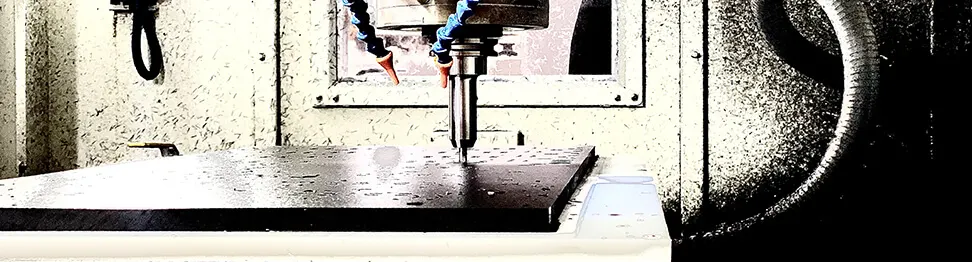
We CNC mill custom parts from engineered plastics, plus aluminum, brass and bronze, on six CNC mills run by a department with more than 60 combined years of milling experience. To your drawing, from one prototype to recurring production runs.
Prefer email? Send drawings to sales@cdsplastics.com- Geometry
- Complex
- Multi-sided and angled parts, on custom fixtures
- Critical dimensions
- ±0.002"–±0.005"
- On critical dimensions, depending on the plastic
- Machines
- 6 mills
- CNC mills in our milling department
- People
- 60+ years
- Combined milling experience in the department
What milling makes
The part holds still. The cutter moves.
In milling, your part is clamped in place while a rotating cutter removes material. It makes the flat, pocketed and drilled features most machine parts are built from. Pick a feature to see how we machine it.
01 · Milled feature
Faces
Flat surfaces cut square to the part. They’re often the datums everything else is measured from.
How we machine it
- Faced flat and square on the first setup
- Used as the datums the other features are cut from
- Finished where the surface does a job
Found on
02 · Milled feature
Pockets
Recesses cut down into a face, open to one side or closed all round.
How we machine it
- Cut to depth with the corner radius drawn
- Roughed, then finished, so heat doesn’t throw the size
- Floors and walls kept even so thin sections stay put
Found on
03 · Milled feature
Slots
Straight or curved channels cut into or through the part.
How we machine it
- Cut to width and length, through or blind
- Straight or curved, to the path drawn
- Positioned from the same datums as the rest of the part
Found on
04 · Milled feature
Hole patterns
Drilled, bored, counterbored or tapped holes in a set layout.
How we machine it
- Drilled, bored, counterbored or tapped
- Positioned from the part’s datums
- Threads cut, or threaded inserts fitted
Found on
05 · Milled feature
Contours and profiles
Outside shapes and curved edges cut around the part.
How we machine it
- Cut to the profile and radii drawn
- Edges broken or chamfered as drawn
- Mating edges held to size
Found on
06 · Milled feature
Angled and multi-side
Features on several faces, or at an angle, reached by turning the part or holding it on a custom fixture.
How we machine it
- Machined over several setups on custom fixtures
- Each setup located from the part’s datums
- Angled faces and compound features cut as drawn
Simple to complex
From one face to every face
Most parts have features on more than one side. We reach them by turning the part, or by holding it on a custom fixture for each new position, with each setup located from the part’s datums.
-
One face
DIAGRAM: part clamped flat, cutter working from above- How we hold it
- Clamped flat while the cutter works from above.
- What it reaches
- Faces, pockets, slots and holes on the top of the part.
Simple parts
-
Around the part
DIAGRAM: part turned on a rotary table under the cutter- How we hold it
- Turned on a rotary table between cuts.
- What it reaches
- Features around the sides of the part, such as cross holes and flats.
Multi-sided parts
-
Angled and compound
DIAGRAM: part held at an angle on a custom fixture under the cutter- How we hold it
- Held in each new position on a custom fixture.
- What it reaches
- Angled faces, compound features and features on every side, over several setups.
Complex parts
You don’t need to choose. We plan how your part is held and machined from the drawing, and it comes with the quote.
The milling department
Real machines, real operators
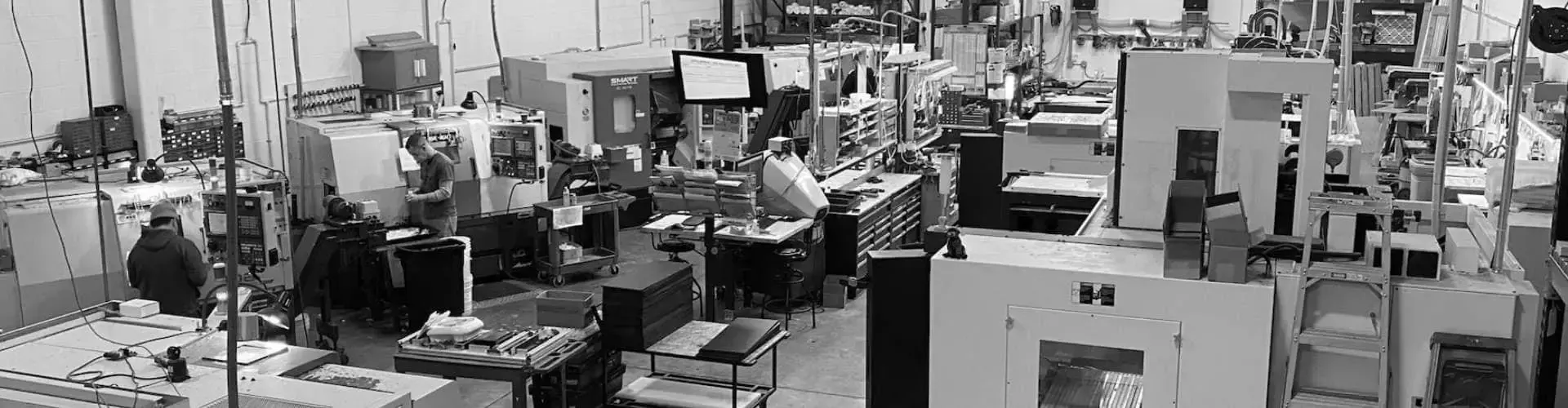
Milling is its own department at CDS, in our shop in Aurora, Illinois. Here’s what’s on the floor.
- Machines
- Six CNC mills, four YCM and two Fadal, with custom fixtures for complex parts.
- With the lathes
- The Fadal mills also handle secondary milling for parts from our CNC lathes.
- People
- More than 60 combined years of experience in the milling department.
- Stock prep
- A SawStop table saw, bandsaws and drill presses for cutting stock to size.
- Shop air
- An air-filtration and particle-evacuation system, designed in-house to remove dust and out-gassing from the shop.
Milled parts
Find your part
What kind of part is it?
Toothed or pocketed wheel
Profiled from plate, with the teeth or pockets milled to your pitch, then bored and keyed to the shaft.
Block or body
Milled from block on several faces, with pockets, ports and hole patterns positioned from the same datums.
Strip, rail or profile
Cut to length and profile from sheet, with slots, bevels and mounting holes where your layout puts them.
Plate or bracket
Cut to outline from sheet or plate, with holes, slots and edges finished to your drawing.
Prototype to production
From first part to repeat runs
One shop from the first part through the production run, so the parts you approved are the parts you keep getting.
-
One prototype
A single part to check fit and function before you commit.
-
Revisions
Changes made as the design settles, from your updated drawing.
-
Production runs
Recurring runs of the approved part, made the same way each time.
- Specs kept for reorders Specifications and CAD files kept, so the next run matches the last.
- Hardware fitted Threaded inserts, pins and other hardware fitted before shipping.
Getting a quote
Start with what you have
Any one of these is enough to start a milling quote. Pick yours to see what’s useful.
A drawing or CAD file
We mill to your drawing.
Useful if you have it
- Drawing or CAD model, with revision
- Plastic, if specified
- Quantity
- Timing you need
Upload files with your quote request.
The old part
Send the old part and we’ll work from it.
Useful if you have it
- What it mounts to or fits
- The plastic, if known
- Quantity
A sketch with dimensions
Send what you know. We’ll take it from there.
Useful if you have it
- The main dimensions
- A photo of the part
- Quantity
Upload files with your quote request.
Buyer questions
CNC milling FAQs
Something else? Call (630) 904-2525.
Send the drawing and we’ll confirm the part fits our machines with the quote.
Yes. We machine complex geometry, including angled faces, compound features and features on every side, using custom fixtures and multiple setups. Send the drawing and we’ll quote it.
Yes. We mill aluminum, brass and bronze alongside engineered plastics.
Yes. Our turning centers include live-tooled setups that add milled features in the same cycle, and our mills handle secondary milling for parts from the lathes.
Timing depends on the part, material and quantity, and comes with your quote. For an emergency breakdown, ask about our expedited service.
Standard quote
Ready to send your drawing?
Experienced help from your first quote to the finished part.