
Custom machined part
PTFE valve seats
- Seats for
- Ball, check, control & more
- Grades
- Virgin, glass, carbon & bronze
- Sizes
- 0.5" to 24"
- Quantity
- One replacement to production
CNC-machined PTFE (Teflon) seats for ball, check, control, gate, butterfly and plug valves. Made in virgin or filled PTFE to your drawing or from the seat you’re replacing, from one emergency replacement to production runs.
- ±0.002"–±0.005" on critical dimensions
- Family owned in Aurora since 1986
- Expedited service for breakdowns
The seat in the valve
What does your seat seal against?
A valve seat is the ring the closing part presses against to stop flow. Its shape depends on the valve. Pick yours.
Ball valve seats
- Closing part
- A ball with a bore that turns a quarter-turn to open or close.
- How the seat meets it
- Two ring seats, one each side, press against the ball with a matching spherical contour.
Tell us
- Valve size and pressure class
- Floating or trunnion-mounted ball
- One seat or both, and the seat profile
Check valve seats
- Closing part
- A disc, ball or poppet that lifts with flow and closes when flow reverses.
- How the seat meets it
- The closing part drops onto the seat ring to stop backflow.
Tell us
- Check type: swing, lift or ball
- Flow direction
- The disc or poppet material
Control valve seats
- Closing part
- A plug or trim that moves to throttle flow, not just open or close it.
- How the seat meets it
- The plug closes onto the seat ring, often after long periods throttling near it.
Tell us
- Plug and seat ring geometry
- How much of the time it throttles
- Flow direction
Gate valve seats
- Closing part
- A wedge or slab gate that slides across the flow.
- How the seat meets it
- The gate faces press against seat rings on one or both sides.
Tell us
- Gate type: wedge, slab or knife
- One seat or both
- Seat ring size and face angle
Butterfly valve seats
- Closing part
- A disc that turns a quarter-turn inside the bore.
- How the seat meets it
- The disc edge presses into a seat ring or liner around the bore.
Tell us
- Valve size
- Seat style: insert ring or full liner
- The disc edge profile
Plug valve seats
- Closing part
- A tapered or straight plug with a port that turns to open or close.
- How the seat meets it
- A PTFE sleeve or liner wraps the plug and seals against it.
Tell us
- Tapered or straight plug
- Sleeve or liner
- Port size
We machine the seat. The valve body, ball or disc, and actuator stay with your valve supplier.
What defines the seat
The seat, its fit and its partner
- The seat
-
- ID and OD
- Thickness
- Sealing contour or angle
- Grooves and counterbores
- Its fit
-
- Seat pocket
- Press fit or retention
- Pressure direction
- What it seals against
-
- Ball, disc, plug or gate
- Its material
- Its condition and finish
A crept or extruded seat may not show its original contour. Send an older print or a less-worn seat if you have one.
Getting a quote
Start with what you have
Any one of these is enough to get a quote started. Pick yours to see what helps.
Send the drawing and we machine to it.
- PTFE grade and filler
- Quantity
- Drawing revision
Upload drawings, CAD files or photos on the quote form.
Send the old seat and we’ll work from it.
- Valve make, model and size
- What’s damaged
- The fluid it seals
Upload drawings, CAD files or photos on the quote form.
Send what you know. We’ll ask for the rest.
- Valve type and size
- A photo of the seat
- Service conditions
Upload drawings, CAD files or photos on the quote form.
Choosing a PTFE grade
PTFE grades for valve seats
A filler changes how a seat handles load, wear and heat, and which fluids it can take. Fillers aren’t interchangeable, so we machine to the grade on your drawing or the original seat.
| Virgin | Glass-filled | Carbon-filled | Bronze-filled | |
|---|---|---|---|---|
| How it behaves | The baseline: no filler. The purest, most chemically resistant form, but the softest and most prone to creep. | Better creep and wear resistance. | Stiffer and more wear-resistant, and carries heat away better. | Very good wear and creep resistance, and carries heat away well. |
| Often considered when | Purity matters, or the fluid could attack a filler. | Seat loads are higher or the valve cycles often. | Steam, or hotter and harder duty. | Hydraulic and other high-load service. |
| Check with us | The load and temperature, since creep needs review. | The fluid. Hydrofluoric acid and strong alkalis attack glass. | How it runs against the ball or disc material. | The fluid. It isn’t for fluids that corrode bronze. |
No grade specified? We’ll suggest one
Based on
- The fluid and concentration
- Temperature
- Pressure
- How often it cycles
- Throttling or on/off
- The original grade
Other seat plastics. We also machine PEEK and other engineering plastics when your valve specifies them.
About PTFEMachined in Aurora
How your seats are made
±0.002"–
±0.005"
On critical dimensions, depending on the plastic. Specs and CAD files are kept, so a reorder matches the last batch.
-
Turned to the contour
Seats CNC turned, with sealing angles, contours and grooves cut as drawn.
CNC turning -
Machined with PTFE in mind
Our machinists allow for how PTFE moves with heat and clamping, so the seat holds its shape.
-
Ready to fit
O-rings fitted to grooved seats with standard parts before they ship, so they go straight into the valve. Assembly service
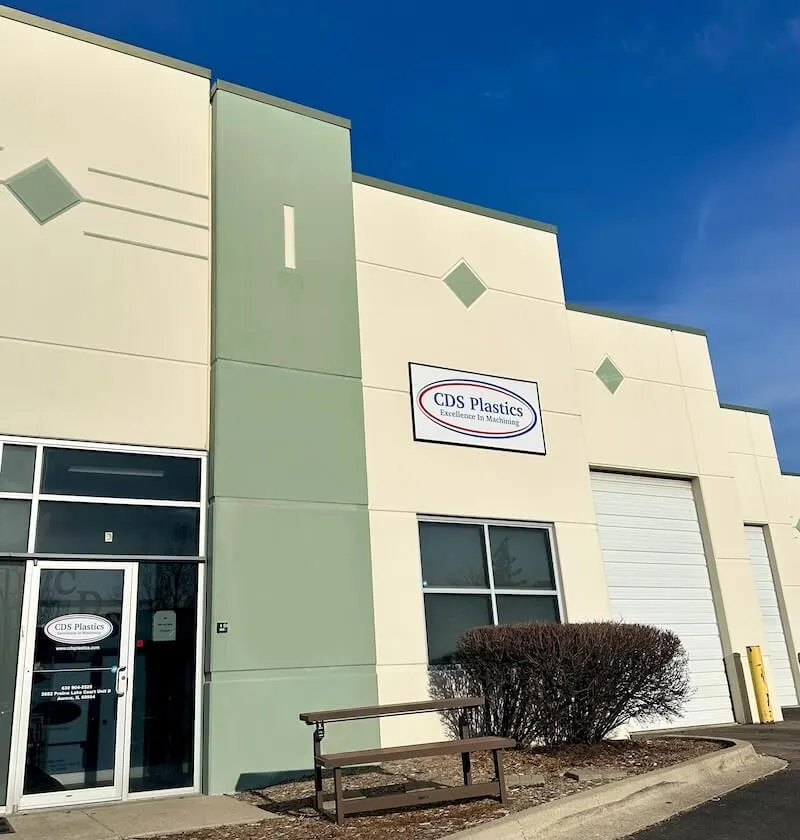
Evaluating a supplier? See the shop and how we check the work.
Where PTFE valve seats are used
Buyer questions
PTFE valve seat FAQs
Something else? Call (630) 904-2525.
Yes. We machine from a single replacement seat to production runs. For an emergency breakdown, ask about our expedited service.
No. Ratings come from your valve design and testing. Tell us the service conditions and we’ll machine the seat to your drawing or sample.
Tell us the documentation you need when you request a quote, and we’ll confirm what we can supply with it.
We hold ±0.002" to ±0.005" on critical dimensions, depending on the plastic. We review your drawing and confirm the critical dimensions, such as the sealing contour and bore, with your quote.
Not a valve seat?
Find the right part
We machine almost any plastic part. If yours isn’t listed, describe it in a quote request.
Standard quote
Ready to send your seat details?
Experienced help from your first quote to the finished part.