
Custom machined part
Plastic plungers
- Seals by
- Moving through fixed packing
- Made by
- CNC turning
- Starting point
- Drawing or worn plunger
- Quantity
- One part to production
CNC-turned plastic plungers for pumps, dosing heads, dispensers and valves. Made to your drawing or from your worn plunger, from one part to production runs.
- ±0.002"–±0.005" on critical dimensions
- Family owned in Aurora since 1986
- Expedited service for breakdowns
How a plunger seals
The seal stays put. The plunger moves.
Packing is fixed in the housing, and the plunger’s smooth outside diameter slides through it on every stroke. That swept surface is the seal. If the seal moves with the part instead, it’s a piston.
-
Drive end
Connection
Where the plunger connects to the drive: threads, flats, cross holes or a shoulder.
- What to send
- The connection type and its dimensions.
-
Swept zone
The seal
The length of the outside diameter that passes through the packing over the full stroke. Its size, roundness, straightness and finish set the seal, so this is what matters most.
- What to send
- The diameter, the swept length and any surface or form requirements on your drawing.
-
Tip
Working end
The end that meets the fluid or the work, with its shape and any features.
- What to send
- The tip shape and any features on it.
And the packing
Packing or seal type, where it sits, the gland or housing, and the stroke length.
What we need to match it
The plunger, its packing and its duty
- The plunger
-
- Outside diameter
- Swept length
- Overall length
- End features
- The packing
-
- Packing type
- Where it sits
- Gland or housing
- Mating bore
- The duty
-
- Stroke
- Speed or cycle
- Fluid
- Temperature
- Cleaning
- Lubrication
Surface and form requirements come from your drawing or spec. We confirm them with the quote.
A worn swept zone may no longer show the original diameter or finish. We measure it, account for the wear and confirm the sizes with you.
Getting a quote
Start with what you have
Any one of these is enough to get a quote started. Pick yours to see what helps.
Send the drawing and we machine to it.
- Quantity
- Plastic, if specified
- Surface requirements
Upload drawings, CAD files or photos on the quote form.
Send the old plunger, with its packing if you can.
- What it runs in
- Where it wore
- Quantity
Upload drawings, CAD files or photos on the quote form.
Send what you know. We’ll ask for the rest.
- Equipment make and model
- Photos of the plunger
- Diameter and length
Upload drawings, CAD files or photos on the quote form.
Plastics for plungers
Common choices, and why
- PTFE Low friction and chemically inert. Watch for creep under packing load.
- PEEK Stiff, low creep, and resists heat and chemicals.
- Acetal Stiff and dimensionally stable, with low moisture uptake.
- UHMW Low friction for lighter duty.
- PVDF For aggressive chemicals.
- Nylon Tough and wear-resistant. It takes on moisture, which we allow for.
- Detectable grades Metal- and X-ray-detectable plastics, for food lines with inspection systems.
Machined in Aurora
How your plungers are made
±0.002"–
±0.005"
On critical dimensions, depending on the plastic.
- CNC turned so the swept diameter runs true over its full length, with threads, flats and end features machined in.
- Specs and CAD files kept, so the next batch matches the last.
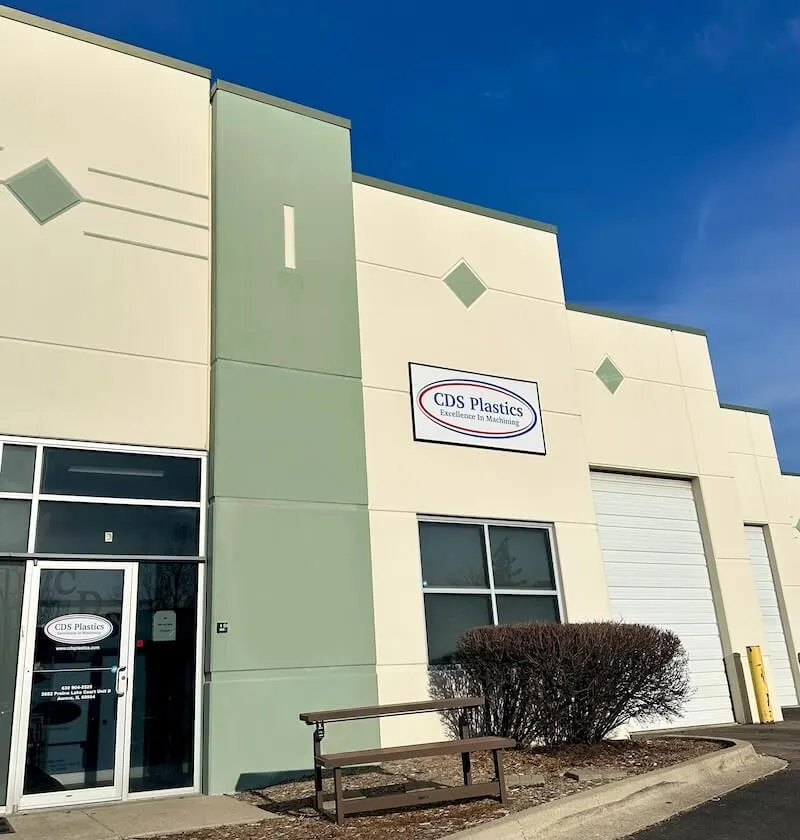
Evaluating a supplier? See the shop and how we check the work.
Where plastic plungers run
Buyer questions
Plastic plunger FAQs
Something else? Call (630) 904-2525.
Yes, a worn plunger can start the review. The swept zone may have lost its original size or finish, so include the packing, the housing or bore, the stroke and any old prints.
We hold ±0.002" to ±0.005" on critical dimensions, depending on the plastic. We review your drawing and confirm the critical dimensions and surface requirements with your quote.
Timing depends on the plunger, plastic and quantity, and comes with your quote. For an emergency breakdown, ask about our expedited service.
Not a plunger?
Find the right part
We machine almost any plastic part. If yours isn’t listed, describe it in a quote request.
Standard quote
Ready to send your plunger details?
Experienced help from your first quote to the finished part.