
Machining service
CNC plastic turning services
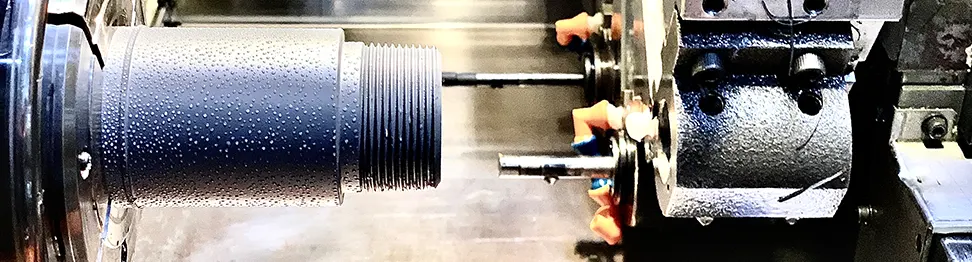
We CNC turn round parts from engineered plastics, plus aluminum, brass and bronze, on five CNC turning centers and an engine lathe, run by lathe specialists with decades of experience. Our twin-spindle, live-tooled setup adds milled features in the same cycle. One prototype to recurring production.
- Equipment
- 5 + 1
- CNC turning centers, plus one engine lathe
- Live tooling
- 1 cycle
- Turned and milled on a twin-spindle, live-tooled setup
- Critical dimensions
- ±0.002"–±0.005"
- On critical dimensions, depending on the plastic
- People
- Since 1986
- Lathe specialists with decades of experience
Anatomy of a turned part
Turned features, plus milled ones
The part spins while the tool cuts, so turning suits anything built around one axis. Our live-tooled setup adds the features that aren’t round. Pick one to see how we machine it.
Turned
Milled, same cycle
Outside diameters and faces
How we machine it: turned on the main spindle, with critical diameters held to your tolerance.
Shoulders and steps
How we machine it: each step turned to its diameter and position in the same setup as the outside diameter.
Grooves
How we machine it: cut to width, depth and position, including O-ring and retaining-ring grooves.
Bores and inside diameters
How we machine it: bored through or blind in the same setup as the outside, so the two run true.
Cross holes
How we machine it: drilled with live tooling while the part is still held, so they stay true to the turned features.
Flats
How we machine it: milled in the same cycle, oriented to the other features.
Slots and keyways
How we machine it: milled to width, depth and length without moving the part to another machine.
Off-center hole patterns
How we machine it: drilled on the bolt circle with live tooling, indexed to the turned features.
Precision in plastic
How we hold size in plastic
±0.002"–
±0.005" On critical dimensions, depending on the plastic.
Plastic moves differently from metal on a lathe. Our lathe specialists plan every turned part around it, and confirm the critical dimensions with your quote.
Why it depends on the plastic-
Diameters
Heat from cutting can change a plastic diameter as it’s cut.
We plan feeds, speeds and finishing passes to manage that heat on critical diameters.
-
Wall
Thin sleeves and bushings can flex under the chuck and the tool, which affects roundness.
We hold and cut thin walls so they come off round.
-
Length
Long, slender parts can push away from the tool along their length.
We support long parts through the cut to keep them straight.
-
Grade & stock
Some plastics, such as nylon, take on moisture and change size. Rod, tube and blanks are held differently.
We allow for how each grade behaves, and choose the stock form and workholding to suit.
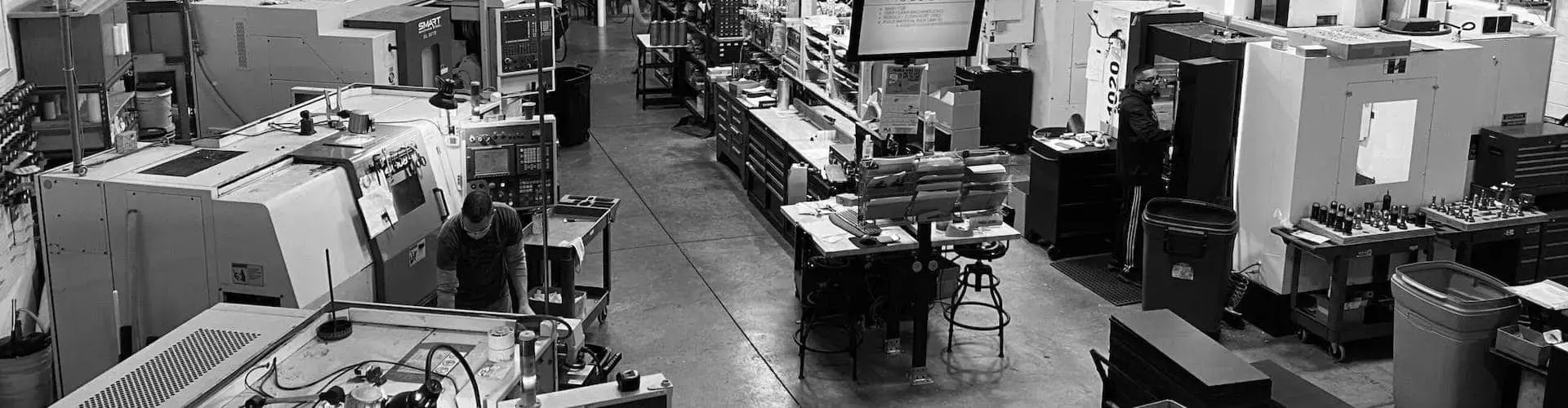
The turning department
Lathe specialists, on real machines
- Five CNC turning centers and one engine lathe
- A twin-spindle, fully live-tooled setup
- Lathe specialists with decades of experience
Round parts we turn
Find your part
What shape is your part?
Sleeve or ring
Bored and turned on the outside, with the wall and bore held to size.
Disc or flat ring
Faced to thickness, with the bore and any sealing faces turned, holding flatness and thickness.
Solid round
Turned from rod with steps and grooves. Cross holes and flats can be milled in the same cycle.
Wheel
Turned true so it runs without wobble, with grooves or a crown cut in the face and the bore sized to the shaft or bearing.
Prototype to production
From first part to repeat runs
One shop from the first part through the production run, so the parts you approved are the parts you keep getting.
-
One prototype
A single turned part to check fit and function before you commit.
-
Revisions
Changes made as the design settles, from your updated drawing.
-
Production runs
Recurring runs of the approved part, turned the same way each time.
- Specs kept for reorders Specifications and CAD files kept, so the next run matches the last.
- Hardware fitted O-rings, retaining rings, threaded inserts and other standard hardware fitted before shipping.
Getting a quote
Start with what you have
Any one of these is enough to start a turning quote. Pick yours to see what’s useful.
A drawing or CAD file
We turn to your drawing.
Useful if you have it
- Drawing and revision
- Plastic, if specified
- Quantity
- Timing you need
Upload files with your quote request.
The old part
Send the old part and we’ll work from it.
Useful if you have it
- What it fits on or in
- The plastic, if known
- Quantity
Measurements and photos
Send what you know. We’ll take it from there.
Useful if you have it
- Rough diameters and length
- A photo of the part
- Quantity
Upload files with your quote request.
Buyer questions
CNC turning FAQs
Something else? Call (630) 904-2525.
Send the drawing and we’ll confirm fit with the quote. Diameter, length and wall all play a part.
Yes. We turn aluminum, brass and bronze alongside engineered plastics. We don’t machine steel or stainless.
Timing depends on the part, material and quantity, and comes with your quote. Quick turnaround is possible on many jobs. For an emergency breakdown, ask about our expedited service.
Standard quote
Ready to send your drawing?
Experienced help from your first quote to the finished part.