
Custom machined part
Plastic sheaves
- Starting point
- Worn sheave or drawing
- Grooves
- Single or multi-groove
- Center
- Bored, bushed or bearing
- Quantity
- One sheave to production
CNC-machined plastic sheaves, also called pulleys, for wire rope, cable and V-belts. Matched to your worn sheave or made to your drawing, from one part to production runs.
- ±0.002"–±0.005" on critical dimensions
- Family owned in Aurora since 1986
- Expedited service for breakdowns
Which sheave do you have?
Rope groove or V-belt groove
“Sheave” covers two different parts. What runs in the groove decides its shape and what we need to know. Pick yours.
Wire rope or cable. A rounded groove that cradles the rope, on hoists, cable runs and tensioning systems.
Wire rope or cable · what defines it
- Rope diameter And its construction, if known.
- Groove radius and depth From a drawing, or read from an unworn area.
- Sheave diameter At the bottom of the groove (tread).
- Flanges Height, and any chips or wear.
- Fleet angle If known, the angle the rope enters at.
The groove has to suit the rope. Too tight and it pinches the rope; too wide and the rope flattens. Send the rope size even when you send the old sheave. Bore and mounting are covered below.
V-belt. One or more V-grooves that wedge the belt. Often called a V-belt pulley.
V-belt · what defines it
- Belt section or part number For example A, B, 3V or 5V, or the belt maker’s number.
- Number of grooves Single or multi-groove.
- Pitch or outside diameter Either one, and say which.
- Face width The overall width across the grooves.
- Drive or idler Whether it transmits power.
Groove angle changes with sheave diameter, so the belt section alone isn’t enough. Send the diameter as well. Bore and mounting are covered below.
Bore and mounting
The center matters as much as the groove
A sheave often fails at the bore or bearing before the groove wears out. Tell us how yours is mounted.
-
Plain bore
Runs directly on a shaft or pin, so the bore is the wear surface.
-
Pressed bearing
Bored to hold a pressed-in ball or roller bearing.
-
Bushing
Fitted with a bushing in the bore. We can machine the bushing too.
-
Keyed drive
Bored with a keyway and set screws, or to accept a standard QD or taper-lock bushing.
Tell us
- Bore and hub length
- Keyway or set screws
- Bearing or bushing size
- Spacers and retention
- Shaft condition
Supplied machined, or assembled with its bearings or bushings. Assembly service
Getting a quote
Start with what you have
Any one of these is enough to get a quote started. Pick yours to see what helps.
Send the drawing and we machine to it.
- Quantity
- Rope or belt size
- Plastic, if specified
Upload drawings, CAD files or photos on the quote form.
Send the old sheave and we’ll work from it.
- Rope size or belt part number
- What wore: groove, flange or bore
- Quantity
Upload drawings, CAD files or photos on the quote form.
Send what you know. We’ll ask for the rest.
- Outside diameter and groove count
- Bore and hub details
- A photo of it installed
Upload drawings, CAD files or photos on the quote form.
Plastics for sheaves
Common choices, and why
- Nylon Strong and wear-resistant, a common choice for wire-rope sheaves. It takes on some moisture, which we allow for when machining.
- Oil-filled nylon Added lubricity, useful where a plain bore runs on a shaft or pin.
- UHMW Low friction and impact-resistant, for wet and lighter-duty sheaves.
- Acetal Stiff and dimensionally stable, so grooves hold their shape.
- Detectable grades Metal- and X-ray-detectable plastics, for lines with inspection systems.
- Aluminum When the sheave needs to be metal. We also machine brass and bronze.
Switching from metal?
Plastic or metal sheaves
Plastic suits many sheaves, but not every one. Load, speed and heat all matter.
Where plastic helps
- Lighter
- Easier to handle and fit, with less rotating weight.
- No rust
- Unaffected by wet, outdoor and washdown service.
- Softer contact surface
- Plastic is softer than metal against the rope or belt.
- Quieter running
- Plastic sheaves generally run quieter than metal.
Machined in Aurora
How your sheaves are made
±0.002"–
±0.005"
On critical dimensions, depending on the plastic. Specs and CAD files are kept, so a reorder matches the last batch.
-
Grooves turned to fit
Groove profiles CNC turned to fit your rope or belt.
CNC turning -
Bored to your shaft
Bores, bearing seats and hubs machined to suit, with keyways and holes milled.
-
One sheave to production
A single replacement, a prototype or recurring runs.
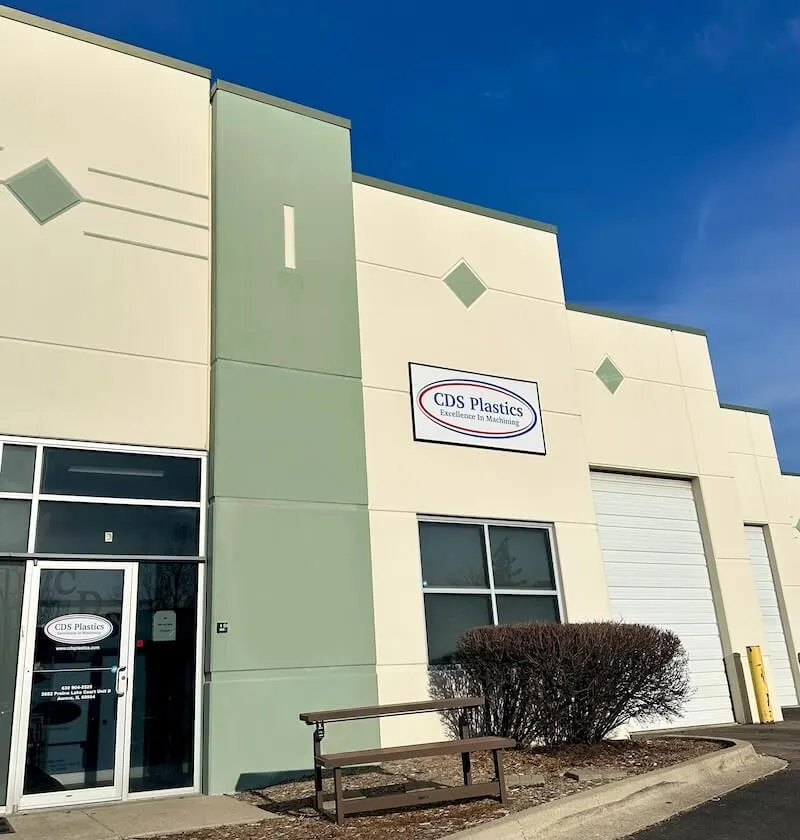
Evaluating a supplier? See the shop and how we check the work.
Buyer questions
Plastic sheave FAQs
Something else? Call (630) 904-2525.
Mostly, yes. A grooved wheel for rope, cable or a V-belt is called either. A pulley with teeth for a toothed timing belt is a different part; see our timing gears page.
Ratings for lifting equipment come from the equipment maker. Send their drawing or specification and we’ll machine the sheave to it.
Yes. Specifications and CAD files are kept for future orders, and reorders use a shorter form.
We hold ±0.002" to ±0.005" on critical dimensions, depending on the plastic. We review your drawing and confirm the critical dimensions with your quote.
Timing depends on the sheave, plastic and quantity, and comes with your quote. For an emergency breakdown, ask about our expedited service.
Not a sheave?
Find the right part
We machine almost any plastic part. If yours isn’t listed, describe it in a quote request.
Standard quote
Ready to send your sheave details?
Experienced help from your first quote to the finished part.