
Custom machined part
Plastic sealing caps and plugs
- Job
- Holds fluid or pressure
- Fit
- Over a feature or into a port
- Starting point
- Drawing or old cap
- Delivered
- O-rings fitted before shipping
Machined caps and plugs that close a port, bore or connection and keep the fluid in. Made to your drawing or from your old cap, in engineered plastics or brass, bronze and aluminum, from one part to production runs.
- ±0.002"–±0.005" on critical dimensions
- Family owned in Aurora since 1986
- Expedited service for breakdowns
What we machine to
Where does yours seal?
We machine the cap to your drawing or the old cap, including the face, groove or thread it seals with. Pick the closest to yours.
Seals on a face
The cap clamps a flat face, or a separate gasket, against the face of the port or flange.
What matters most
- Flatness and finish of both faces
- How it’s clamped or tightened
- Gasket type and size, if separate
What to send
- The port face, or a photo of it
- Clamp or thread details
- The old gasket, if any
Seals with an O-ring
An O-ring sits in a groove on the cap and seals on a face or in the bore.
What matters most
- Groove size and where it seals
- The bore or face it seals on
- O-ring size and material
What to send
- O-ring size and material
- The bore or face size
- Whether we should fit the O-ring
Seals on the thread
A tapered thread, or a straight thread with a sealing feature, closes the port as it tightens.
What matters most
- Thread type and size
- How far it’s tightened
- The port material
What to send
- Thread callout
- Port material
- How it’s installed
Something else
Another sealing arrangement, made to your drawing or matched to the old cap.
What matters most
- Where the seal makes contact
- How the cap is held on
- What it mates with
What to send
- A drawing or the old cap
- A photo of it installed
- The part it closes
Cap over a male feature, or plug into a port? Tell us which part it mates with and the exact connection.
Replacing a cap?
Why sealing caps start to leak
Most leaks come down to the seal losing contact. These are common reasons it happens: things to check, not a diagnosis.
- Over-tightened A tapered plastic thread wedges and splits the cap or its port.
- Creep The plastic slowly relaxes under constant load, and the seal loosens.
- Temperature change Heat or cold changes the cap’s stiffness and size.
- Chemical attack The fluid swells or weakens the cap or its O-ring.
- Damaged port or wrong assembly A marked sealing face, a missing seal or a mismatched part.
Seal contact lost
Leak
Send the cap with photos of the port and where it leaked. A damaged port can leak even with a new cap.
Getting a quote
Start with what you have
Any one of these is enough to get a quote started. Pick yours to see what helps.
Send the drawing and we machine to it.
- Material, if specified
- Drawing revision
- Quantity
Upload drawings, CAD files or photos on the quote form.
Send the old cap with photos of the port it closes.
- The port or thread it fits
- Where it leaked
- Quantity
Upload drawings, CAD files or photos on the quote form.
Send what you know. We’ll ask for the rest.
- The thread or port size
- How it seals
- A photo of it installed
Upload drawings, CAD files or photos on the quote form.
Materials for sealing caps
Chosen by what it holds
- PTFE Inert to most chemicals. Watch for creep under clamping load.
- PVDF Strong chemical resistance with more stiffness than PTFE.
- PEEK For heat and chemicals, with low creep.
- Polypropylene and CPVC Economical choices for water and chemical service.
- Acetal Stiff and holds its thread form, for milder fluids.
- Detectable grades Metal- and X-ray-detectable plastics for lines with inspection systems.
- Brass, bronze and aluminum When a metal closure suits the duty.
Machined in Aurora
How your sealing caps are made
±0.002"–
±0.005"
On critical dimensions, depending on the material. Specs and CAD files are kept, so a reorder matches the last batch.
-
Sealing features machined in
Threads, sealing faces and O-ring grooves machined to your drawing.
-
Ready to fit
O-rings and other standard seals fitted before shipping, so there’s no second supplier.
-
One cap to production
A single replacement, a prototype or recurring runs.
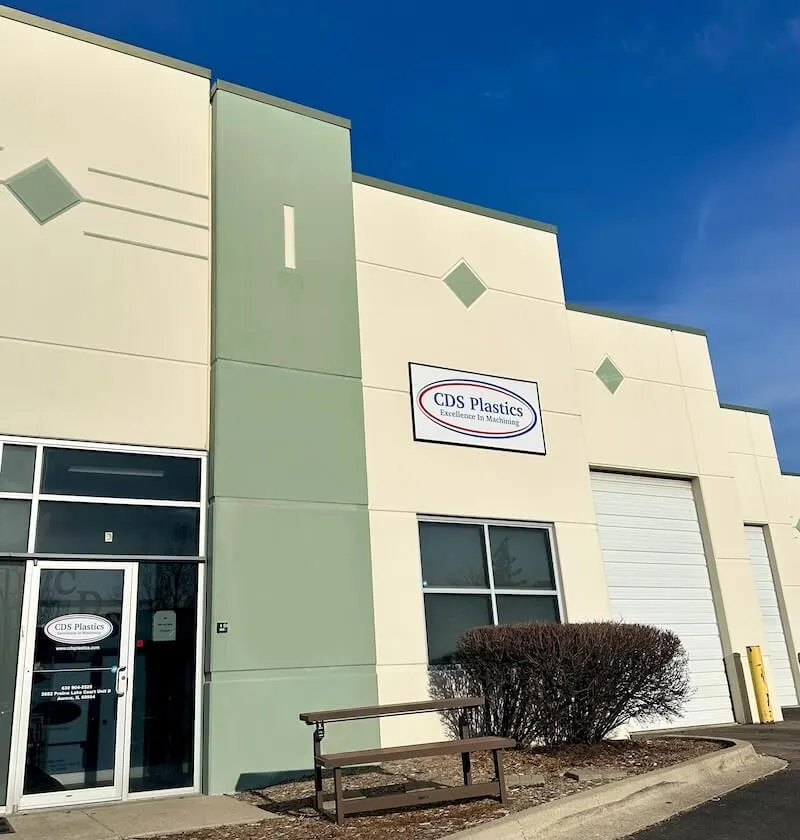
Evaluating a supplier? See the shop and how we check the work.
Where sealing caps are used
General uses for machined closures
- Valve & fluid handling Unused ports on valve bodies and manifolds
- Chemical processing Port and bore closures in chemical service
- Water treatment Filter housing and vessel ports
- Instruments & lab equipment Sensor and sample ports
Buyer questions
Sealing cap FAQs
Something else? Call (630) 904-2525.
Yes. Send it with photos of the port it closes. Wear, creep or damage can change a cap’s shape, so we measure it, account for the change and confirm the details with you.
Your drawing or specification sets the pressure and temperature the cap has to meet, and we machine to it. Include them with your request so we can suggest suitable plastics.
We hold ±0.002" to ±0.005" on critical dimensions, depending on the material. We review your drawing and confirm the critical dimensions, such as the thread or sealing face, with your quote.
Timing depends on the cap, material and quantity, and comes with your quote. For an emergency breakdown, ask about our expedited service.
Not a sealing cap?
Find the right part
We machine almost any plastic part. If yours isn’t listed, describe it in a quote request.
Standard quote
Ready to send your cap details?
Experienced help from your first quote to the finished part.