
Custom machined parts
Machined actuator components
- For
- Pneumatic, electric & solenoid
- Materials
- Plastics, aluminum, brass & bronze
- Starting point
- Drawing, section or worn part
- Delivered
- Single parts or fitted
Plastic pistons, guides, bushings, nuts, linkages and isolating couplers for pneumatic, electric and solenoid actuators. Machined to your drawing or from the worn part, from one prototype to production runs.
- ±0.002"–±0.005" on critical dimensions
- Family owned in Aurora since 1986
- Expedited service for breakdowns
Why the part is plastic
Common reasons actuator parts are plastic
When a part inside an actuator can’t be metal, it’s usually for one of these reasons. Whatever yours is, we machine it to your drawing.
-
Run dry
Guides, bushings, nuts and pistons that slide or turn without grease, so there’s nothing to wash out, dry up or attract dirt.
Common in food and packaging equipment, clean areas, and anywhere grease would collect dust or reach the product.
- Guide bushes
- Lead-screw nuts
- Pistons
- Carriages
-
-
Nonmagnetic
Parts near a solenoid coil or position sensor that mustn’t affect the magnetic field.
- Solenoid guides
- Sensor mounts
- Plunger parts
-
Isolate
Parts that break an electrical or heat path between the motor, drive and the rest of the machine.
- Couplers
- Spacers
- Insulating bushes
-
Washdown & chemicals
Parts that stay free of rust and corrosion in wet, cleaned or chemical service.
- Rod guides
- Nuts
- Pistons
-
Lighter moving parts
Less mass to start and stop, for actuators that cycle fast.
- Pistons
- Linkages
- Carriages
-
Components we machine
Inside the actuator
These are the components we’re most often asked for, machined to your drawing or from a worn part.
Something else inside the actuator? We machine almost any plastic part. Send the drawing.
- Piston Carries a seal along a pneumatic or hydraulic cylinder bore. Pistons
- Plunger or armature guide Guides the moving plunger in a solenoid, or a member through fixed packing. Plungers
- Guide bush or rod bearing Supports and guides a rod or shaft as it slides or turns. Bushings
- Lead-screw or drive nut Turns screw rotation into straight-line motion in an electric actuator. Quote it
- Rod-end or linkage block Connects the actuator to the part it moves. Quote it
- Stem or push rod Carries motion from the actuator out to the mechanism. Quote it
- Insulating coupler Joins two shafts or members while breaking an electrical or heat path. Insulators
- Valve spool Switches ports in a valve actuator as it shifts. Spools
What we need
The part, what it meets, how it runs
Send the drawing or assembly section with the component marked. These details help us quote it and suggest suitable plastics.
-
The component
- What it is and where it sits
- Drawing, section or the worn part
- Single part, or fitted with seals or inserts
- Material, if specified
-
What it meets
- Mating parts and how they connect
- Stroke or rotation
- End features: threads, flats, holes
- How it’s assembled
-
How it runs
- Dry, lubricated or wet
- Temperature
- Fluids and cleaning
- Quantity and timing
- Fits, surfaces and tolerances come from your drawing. We confirm them with the quote.
- Worn part? Send it with the assembly or its section drawing. Wear can hide the original sizes.
Getting a quote
Start with what you have
Any one of these is enough to get a quote started. Pick yours to see what helps.
Send the drawing and we machine to it.
- The component marked
- Material, if specified
- Quantity
Upload drawings, CAD files or photos on the quote form.
Send the worn part with photos of the assembly.
- What it mates with
- Features you trust
- Quantity
Upload drawings, CAD files or photos on the quote form.
Send what you know. We’ll ask for the rest.
- Actuator make and model
- Which part you need
- Photos of it
Upload drawings, CAD files or photos on the quote form.
Materials for actuator components
Common choices, and why
- Acetal Stiff, dimensionally stable and low in friction. A common choice for guides, nuts and linkages.
- PTFE The lowest friction. Watch for creep under constant load.
- PEEK Strength, heat and chemical resistance, with low creep.
- PET-P Low moisture uptake, so it holds close fits in wet service.
- Nylon Tough and wear-resistant. It takes on moisture, which we allow for.
- Phenolic and G10 Rigid laminates for electrically insulating parts.
- Polyimide For high heat.
- Aluminum, brass and bronze When a metal component suits the part.
Machined in Aurora
How your components are made
±0.002"–
±0.005"
On critical dimensions, depending on the material. Specs and CAD files are kept, so a reorder matches the last batch.
-
Turned and milled
Round parts turned with flats, cross holes and threads added on live-tooled turning; blocks and linkages milled on our CNC mills, with custom fixtures for complex, multi-sided parts.
-
Fitted before shipping
Wear bands, seals, O-rings and threaded inserts fitted to the machined part, so there’s no second supplier. Assembly service
-
Prototype to production
One prototype for a new design, or recurring runs for an actuator in production.
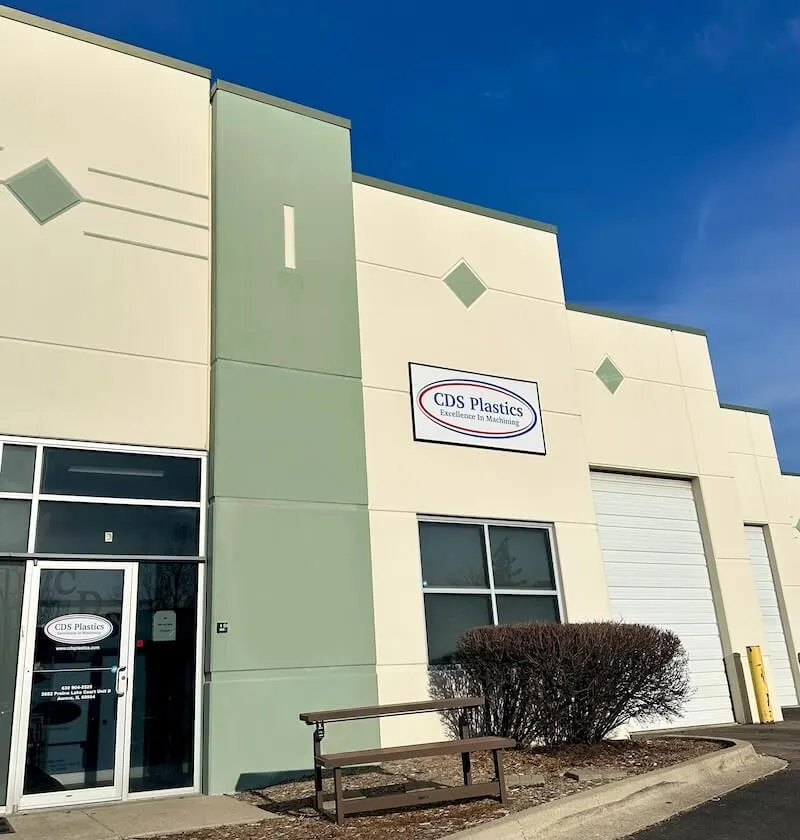
Evaluating a supplier? See the shop and how we check the work.
Where actuator components are used
General uses for these parts
Buyer questions
Actuator component FAQs
Something else? Call (630) 904-2525.
We machine the components inside an actuator, and can fit seals, wear bands and threaded inserts before shipping. The actuator itself, and its design and rating, stay with you or the actuator maker.
Yes. Send it, with the assembly or section drawing if you have one. Wear can change the original sizes, so we measure it, account for the wear and confirm the sizes with you.
We hold ±0.002" to ±0.005" on critical dimensions, depending on the material. We review your drawing and confirm the critical dimensions, such as bores and running fits, with your quote.
Timing depends on the component, material and quantity, and comes with your quote. For an emergency breakdown, ask about our expedited service.
Not an actuator part?
We machine almost any plastic part. If yours isn’t listed, describe it in a quote request.
Standard quote
Ready to send your component details?
Experienced help from your first quote to the finished part.