
Custom machined part
Plastic caps and end caps
- Fit
- Over a feature or into an opening
- Jobs
- Protect, mask & roller end
- Starting point
- Drawing or old cap
- Quantity
- One part to production
Machined plastic caps, plugs and end caps that close off a bore, port, tube or shaft end and protect threads and finished surfaces. Made to your drawing or from your old cap, from one part to production runs.
- ±0.002"–±0.005" on critical dimensions
- Family owned in Aurora since 1986
- Expedited service for breakdowns
What your cap does
Three jobs, three sets of details
What the cap has to do decides what matters most and what we need from you. Pick the closest.
Protect and mask
Keeps dirt, grease and handling damage off threads, fittings, tubes and finished surfaces. Rigid, reusable masking caps and plugs keep plating and anodizing off bores, faces and threads that must stay bare.
What matters most
- A fit that stays on but comes off cleanly
- The surface it must protect
- Bath chemistry and temperature, for masking
What to send
- The part it protects, or a drawing
- How it’s fitted and removed
- The process it goes through
Cover a bore or shaft end
Closes off a bore, shaft end, port or opening on equipment, either for a while or for good.
What matters most
- Temporary or permanent
- How it’s retained
- Washdown, heat, chemicals or vibration
What to send
- The mating part or its dimensions
- The current cap, if any
- Where it sits and what it sees
Roller end caps and end bearings
Closes a conveyor roller tube, and may carry the shaft or a running surface inside it.
What matters most
- Tube ID and the end fit
- Shaft shape and size, round or hex
- Whether it carries a bearing or running load
What to send
- The old end cap
- Tube ID and shaft details
- Load and speed, if it carries the shaft
What defines the fit
Over it, or into it?
The outside diameter alone doesn’t define a cap. The fit comes from the feature it closes and how it stays on.
Cap Fits over
A shaft end, tube end, spigot or male thread.
- Outside of the mating feature
- Engagement length
- Shoulder or stop it seats on
Plug Goes into
A bore, port or female thread.
- Bore or port size and depth
- Any thread, step or taper
- Lip or flange that sits outside
For either
- Retention: thread, press, snap or set screw
- How it’s removed
- Orientation
- Nearby clearances
- Mating material
A worn or deformed cap may not show the original fit. Tell us which surfaces you trust, and whether the part it closes has changed.
Getting a quote
Start with what you have
Any one of these is enough to get a quote started. Pick yours to see what helps.
Send the drawing and we machine to it.
- Quantity
- Plastic, if specified
- What it covers
Upload drawings, CAD files or photos on the quote form.
Send the old cap, with the part it fits if you can.
- How it failed
- How it’s held on
- Quantity
Upload drawings, CAD files or photos on the quote form.
Send what you know. We’ll ask for the rest.
- The size of the feature it closes
- Over it or into it
- A photo of it in place
Upload drawings, CAD files or photos on the quote form.
Plastics for caps
Chosen by the cap’s job
| If it has to | Why it matters | Common choices |
|---|---|---|
| Stay on | Stiffness and low creep keep a press or snap fit gripping over time. | |
| Take knocks and repeated removal | Toughness stops cracking at the edge or retention feature. | |
| Handle heat or chemicals | For washdown, plating and anodizing baths, or hot service. | |
| Carry a running surface | Roller end bearings need wear resistance and low friction. | |
| Be detectable | For food lines with metal or X-ray inspection. |
Machined in Aurora
How your caps are made
±0.002"–
±0.005"
On critical dimensions, depending on the plastic. Specs and CAD files are kept, so a reorder matches the last batch.
-
Turned or milled to fit
CNC turned for round caps and plugs, milled for other shapes, fitted to the feature they close.
CNC turning -
Threads and retention
Threads, grip features, set-screw holes and pull tabs machined in.
-
Ready to fit
O-rings, gaskets or standard hardware fitted before shipping where the cap needs them, so there’s no second supplier.
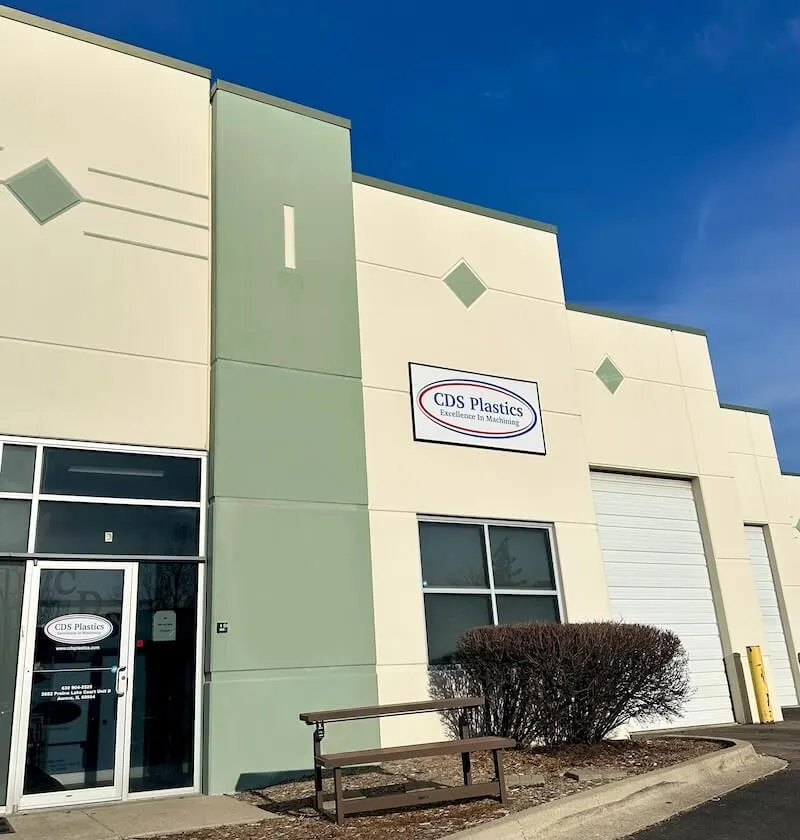
Evaluating a supplier? See the shop and how we check the work.
Where machined caps are used
Buyer questions
Plastic cap FAQs
Something else? Call (630) 904-2525.
Yes. Send it with the part it fits if you can. A worn cap may not show the original fit, so we measure it, account for the wear and confirm the fit with you.
Yes. Tell us how it’s fitted, what it’s exposed to and why the old one failed, and we’ll suggest suitable plastics.
We hold ±0.002" to ±0.005" on critical dimensions, depending on the plastic. We review your drawing and confirm the critical fit dimensions with your quote.
Timing depends on the cap, plastic and quantity, and comes with your quote. For an emergency breakdown, ask about our expedited service.
Not a cap?
Find the right part
We machine almost any plastic part. If yours isn’t listed, describe it in a quote request.
Standard quote
Ready to send your cap details?
Experienced help from your first quote to the finished part.